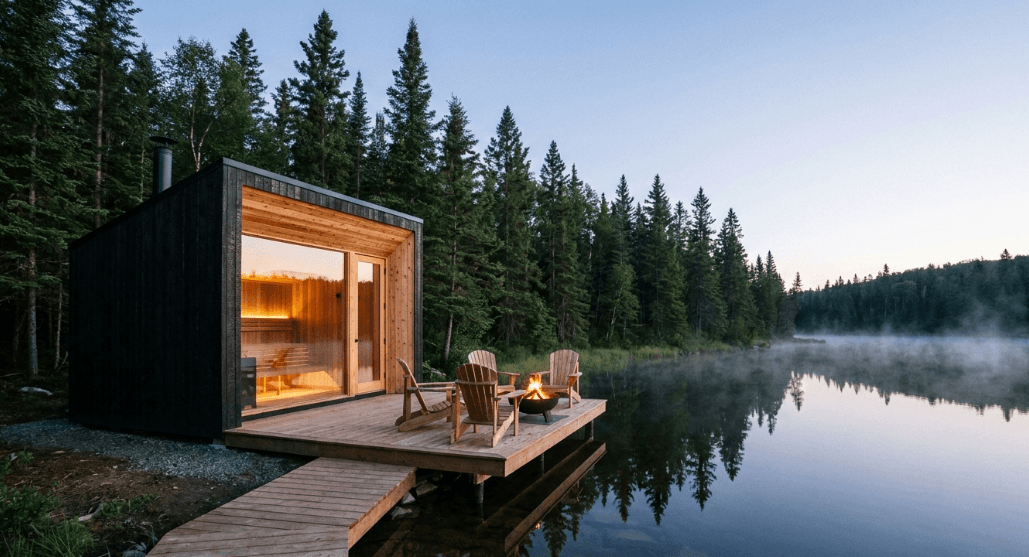
Cedar and heat-treated hemlock are the two most common wood choices for an outdoor sauna, and both perform well when the cabin has a drained foundation and a roof with a real overhang. Cedar costs more, carries a stronger natural aroma, and has decades of use behind it. Heat-treated hemlock runs 10 to 20 percent cheaper for a comparable size, resists warping slightly better in humid climates, and smells more neutral. Neither is a wrong choice; the right one depends on climate, budget, and how much scent matters to the person using it.
What Actually Happens During Heat Treatment?
Heat-treated hemlock goes through a kiln process that runs the wood at high temperatures for an extended period, which drives out moisture and breaks down the natural sugars that would otherwise feed mold, mildew, and insects over time. The result is a board that is more dimensionally stable, meaning it swells and shrinks less with humidity swings than raw cedar does. The tradeoff is that the same process mutes most of hemlock’s natural scent and darkens the wood to a warmer, slightly toasted tone rather than cedar’s pale reddish grain. For an outdoor cabin that goes through repeated wet-dry cycles across a full year of weather, that added stability is a meaningful, not cosmetic, advantage.
How Do the Two Woods Handle Rain and UV Exposure Outdoors?
Cedar contains natural oils that give it real rot resistance on its own, which is why it has been the default choice for outdoor structures for generations. Left unsealed, though, it grays within a year or two of steady sun exposure as UV breaks down surface fibers, and it needs a fresh coat of exterior sealant on roughly the same one- to three-year cycle as any other outdoor wood. Heat-treated hemlock resists moisture pickup slightly better in genuinely humid or coastal climates because the heat treatment has already removed much of what would otherwise absorb water, but it still needs the same periodic resealing to keep its color from fading unevenly. Neither wood is maintenance-free outdoors; the difference is a matter of degree, not category.
Which Costs More to Buy and Install?
Cedar carries a real price premium, typically 10 to 20 percent higher than a comparable heat-treated hemlock cabin, because the raw material itself costs more and demand for it as an outdoor building material stays consistently high. That gap holds across most cabin sizes, from compact two-person units up through six- and eight-person builds. Installation costs, foundation work, and any electrical run for the heater are essentially identical between the two, since the wood choice does not change what sits underneath or how the unit gets wired. Anyone budgeting a build should treat the wood species as one line item among several, alongside heater size and site prep, rather than the deciding factor on its own.
Which Wood Should a Beginner Actually Choose?
For a first sauna, heat-treated hemlock is the easier default in humid, rainy, or coastal climates where its added moisture stability pays off fastest, and the lower price point makes it a reasonable way to try outdoor sauna ownership without the largest possible commitment. Cedar remains the stronger pick for buyers in drier climates who want the traditional aroma and are comfortable paying more for a wood with a longer real-world track record outdoors. Shoppers weighing both often review current lineups from a specialty retailer, and the team at SweatDecks lists both wood options side by side with pricing, which makes the tradeoff easier to see before committing to either one. Neither choice locks a buyer into worse performance; both hold up for well over a decade with routine care.
Does the Choice of Wood Change the Health Case for Regular Use?
The research behind sauna use does not distinguish between wood species; what matters for the associations researchers have measured is consistent heat exposure at a stable temperature, not the material the cabin is built from. A 2023 review in Mayo Clinic Proceedings describes cardiovascular associations tied to regular sauna sessions and other lifestyle factors across large cohorts, a 2018 paper in the American Journal of Physiology covers the underlying heat and cold physiology, and a 2018 systematic review in Evidence-Based Complementary and Alternative Medicine reported comparable patterns. A cabin that holds heat evenly and does not leak warm air through a warped panel, regardless of whether it is cedar or heat-treated hemlock, is what actually supports the kind of routine use those studies describe. In that sense, wood choice matters more for maintenance and budget than it does for anything health-related.
How Do the Two Woods Handle Extreme Temperature Swings?
An outdoor cabin in a climate with real winters goes through repeated freeze-thaw cycles every year, and wood that absorbs and releases moisture unevenly is more prone to cracking at the joints over time. Heat-treated hemlock’s lower moisture content going in means it swells less when it does pick up humidity, which translates into fewer hairline cracks around screw holes and panel seams after several winters. Cedar handles the same cycles reasonably well thanks to its natural oils, but it tends to show more surface checking, small splits along the grain, sooner than heat-treated hemlock does in side-by-side installations exposed to the same climate. Neither issue is structural on its own, and both are addressed by the same periodic resealing either wood needs, but hemlock’s edge here is real for buyers in colder regions.
Does the Choice Affect Interior Comfort on the Bench?
Bench surface temperature matters more than people expect, since that is the wood a person actually sits against for 15 to 20 minutes at a stretch. Both cedar and heat-treated hemlock resist getting uncomfortably hot to the touch better than denser hardwoods would, but hemlock’s slightly denser grain after heat treatment holds a touch more residual warmth between sessions, which some owners find more comfortable stepping into a cabin that was used earlier the same day. Cedar’s lighter, more open grain cools faster between sessions, which some owners in warmer climates actually prefer. This is a minor factor next to cost and durability, but it is worth sitting on a sample of each, where possible, before deciding.
Frequently Asked Questions
Is cedar or heat-treated hemlock better for an outdoor sauna? Both hold up well. Cedar has a longer track record and stronger natural aroma; heat-treated hemlock is more dimensionally stable and usually 10 to 20 percent cheaper.
Does heat-treated hemlock smell different from cedar? Yes. The heat-treatment process mutes most of its natural scent, so the cabin smells faintly toasted rather than the strong cedar aroma people expect.
Which wood resists outdoor rot better? Heat-treated hemlock has a slight edge in humid climates since the process removes moisture and sugars that feed rot, though both perform well with a proper foundation.
Does cedar or hemlock fade faster in direct sun? Untreated cedar typically grays within one to two years of steady sun exposure. Heat-treated hemlock tends to fade more gradually and evenly over a similar period.
References
- Does the Combination of Finnish Sauna Bathing and Other Lifestyle Factors Confer Additional Health Benefits? A Review of the Evidence, Mayo Clinic Proceedings, 2023
- Effects of heat and cold on health, with special reference to Finnish sauna bathing, American Journal of Physiology, 2018
- Clinical Effects of Regular Dry Sauna Bathing: A Systematic Review, Evidence-Based Complementary and Alternative Medicine, 2018